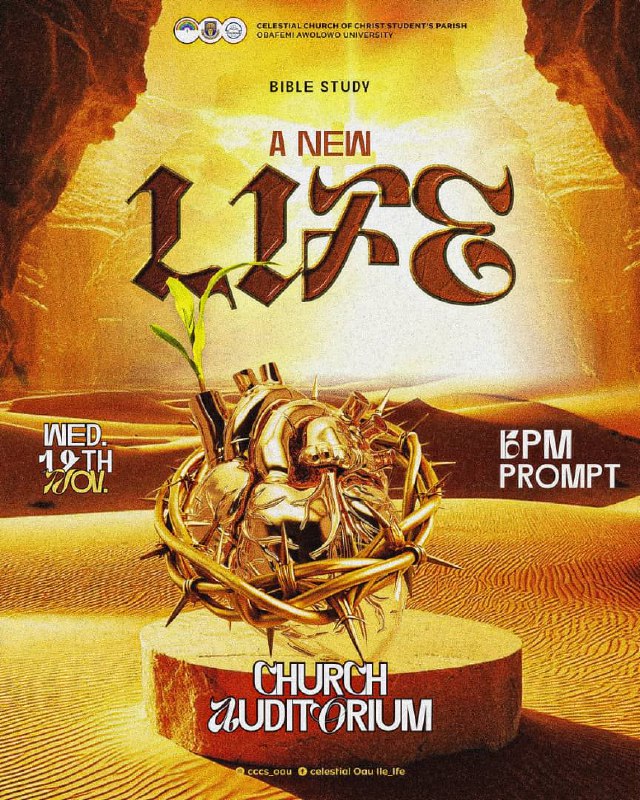
TOPIC: THE NEW LIFE
Anchor Text: 2 Corinthians 5:17: Therefore, if anyone is in Christ, he is a new creature: old things are passed away, behold all things are become new.
AIMS:
• To help us understand what a new life means
• To help us understand how we can attain a new life
• To teach us how to live the new life
INTRODUCTION
In the beginning, God created man in his own image and likeness (Genesis 1 vs 26-27), and man enjoyed perfect fellowship with God. But this fellowship was broken when Adam disobeyed God in the Garden of Eden.
Romans 5:12: “Wherefore, as by one man sin entered into the world, and death by sin; and so, death passed upon all men, for that all have sinned.”
From the text above, we understand that it was through the sin of one man (the first Adam) that death came into the world. If Adam had not sinned by disobeying God, the concept of an old life or the need for a new life would never have existed. But because sin entered through him, man became separated from God, and the nature of sin took over humanity. This made it necessary for a new life to be made available through Christ (the second Adam), who came to restore what was lost in Eden (1 Corinthians 15:45, Romans 5:19).
Man’s fall brought death and separation from God. Humanity became enslaved to sin, walking according to the desires of the flesh rather than the will of God (Ephesians 2:1–3). Every man born into this world inherits this sinful nature and stands in need of redemption.
THE OLD SELF
The Origin of the Old Self:
The old self began with Adam’s disobedience in the Garden of Eden. When he sinned, sin entered the world, and death followed. Every human born after him inherited a corrupt nature that is self-centered and opposed to God (Romans 5:12). This fallen nature is what the Bible calls “the flesh”: man living independently of God and ruled by his own desires.
The old self is not just bad behavior; it is the very nature of man corrupted by sin. Everything that comes from it—its thoughts, words, and actions—is stained by rebellion and separation from God (Jeremiah 17:9).
The Nature of the Old Self:
The old self is:
• Rebellious: resisting the authority and commands of God (Isaiah 53:6).
• Self-centered: always seeking its own satisfaction and glory.
• Deceptive: appearing righteous outwardly but inwardly corrupt (Matthew 23:27–28).
• Spiritually dead: unable to please God or produce true righteousness (Romans 8:8).
The old self is the offspring of Satan’s deception in the Garden. Through lies and deceit, he led man into rebellion, and from that rebellion came sin and death (Genesis 3:4–6, James 1:14–15). Because of this, man by nature became a child of disobedience, walking under the influence of the enemy (Ephesians 2:2–3).
God’s Verdict on the Old Self:
God’s solution for the old self is not improvement but death. The old man must be crucified so that the new life can emerge. At the Cross, the old self was put to death with Christ (Romans 6:6). True Christian living begins when we acknowledge the death of the old man and yield daily to the Spirit. Only then can the life of God truly flow through us (Galatians 2:20).
THE NEW LIFE
Origin of the New Life:
The new life is a divine creation, produced by God through the work of Jesus Christ and the power of the Holy Spirit. It is not something man can achieve through good deeds, religion, or self-effort (John 1:12–13). This life is born of God, and it begins the moment a person receives Christ by faith and obedience (John 3:5, 1 Peter 1:23).
The new life comes from the Word of God: the seed that produces a divine, eternal, and incorruptible nature within the believer. When we receive, believe, and obey God’s Word, the Holy Spirit transforms our inner nature, reproducing the life of Jesus Christ in us (Galatians 2:20).
Nature of the New Life:
The new life is:
• Righteous and Holy: Its character is aligned with God’s truth (Ephesians 4:24).
• Progressively Renewed: The believer grows and matures over time (Colossians 3:10).
• Spiritually Alive: Able to please God and produce fruit that glorifies Him (Romans 8:10).
• Reflecting God’s Likeness: Restores what was lost in Eden; the believer becomes a reflection of God in character and actions (Romans 8:29).
ACQUIRING THE NEW LIFE: SALVATION
Salvation is the divine process through which a sinner receives new life by placing faith in Jesus Christ. It is not earned by human effort or good deeds but received as a gift of God’s grace through faith (Ephesians 2:8–9). This new life becomes available to anyone who responds to the message of the gospel with a sincere heart.
Romans 10:9 clearly explains God’s provision: a person is saved when they believe in their heart that God raised Jesus from the dead and confess with their mouth that Jesus is Lord. This shows that salvation is both an inward conviction and an outward acknowledgment of Christ’s Lordship.
The moment a person sincerely turns to Christ, God begins to change them from the inside out, giving them a new heart, new desires, and a new identity in Him. The old life is left behind, and the believer steps into the fullness of being a new creation (2 Corinthians 5:17). Salvation marks the beginning of this new life, restoring fellowship with God and starting the journey of growth and renewal.
DEAD WORKS:
Dead works are actions produced by the old self: works done in human effort without the Spirit of God. They may appear righteous before men but are lifeless before God because they do not proceed from faith or a regenerated heart (Hebrews 6:1).
Examples of Dead Works:
1. Religious practices without a genuine heart change (Matthew 15:8–9).
2. Doing good deeds for self-glory or recognition (Matthew 6:1–4).
3. Trying to earn God’s favor through human effort instead of faith (Ephesians 2:8–9).
4. Acts of kindness done without dependence on God.
5. Living morally upright but without Christ (Romans 8:8).
The old self cannot produce life because it is corrupted at the root. Until it dies, everything it produces remains spiritually dead.
Even after receiving the new life, some believers may still fall into dead works because the old patterns of the flesh or worldly influence can linger. The key to curbing this is to remain connected to Christ and live by the Spirit. Daily meditation on God’s Word reminds us of our new identity (2 Corinthians 5:17; 1 Peter 1:23), while walking in the Spirit directs our thoughts and desires toward God rather than the flesh (Romans 8:5–6). Renewal is an ongoing process, and when we notice old habits or dead works creeping in, confessing and repenting restores fellowship with God (1 John 1:9). By staying rooted in Christ, guided by the Spirit, and shaped by the truth of Scripture, the believer progressively leaves dead works behind and lives a life that reflects God’s life and purpose.
LIVING THE NEW LIFE
After receiving new life, the believer is called to:
• Put off the old self: Renounce sinful habits, thoughts, and attitudes (Ephesians 4:22).
• Put on the new self: Cultivate righteousness, holiness, and the likeness of God (Ephesians 4:24).
• Walk in the Spirit: Allow God’s Spirit to guide daily decisions, attitudes, and actions (Galatians 5:16–25).
The Process of Renewal:
1. Step by Step Change: The new life grows little by little as we spend time with God (Colossians 3:10).
2. Daily Mind Renewal: By reading and obeying God’s Word, our thoughts, attitudes, and choices start to change (Romans 12:2).
3. Producing Good Fruit: Our new life shows in love, joy, peace, patience, kindness, goodness, faithfulness, gentleness, and self-control (Galatians 5:22–23).
4. Becoming Like Christ: As we keep following God, we begin to reflect Jesus in our actions, words, and character (Romans 8:29).
CONCLUSION
The old self is dead and cannot produce life; the new life is alive in Christ and grows as we obey God. To live in this new life is to daily walk by the Spirit, reject the ways of the old man, and reflect God’s character in every thought, word, and action. Salvation is the entry point, but living the new life is a continual journey of renewal and transformation.